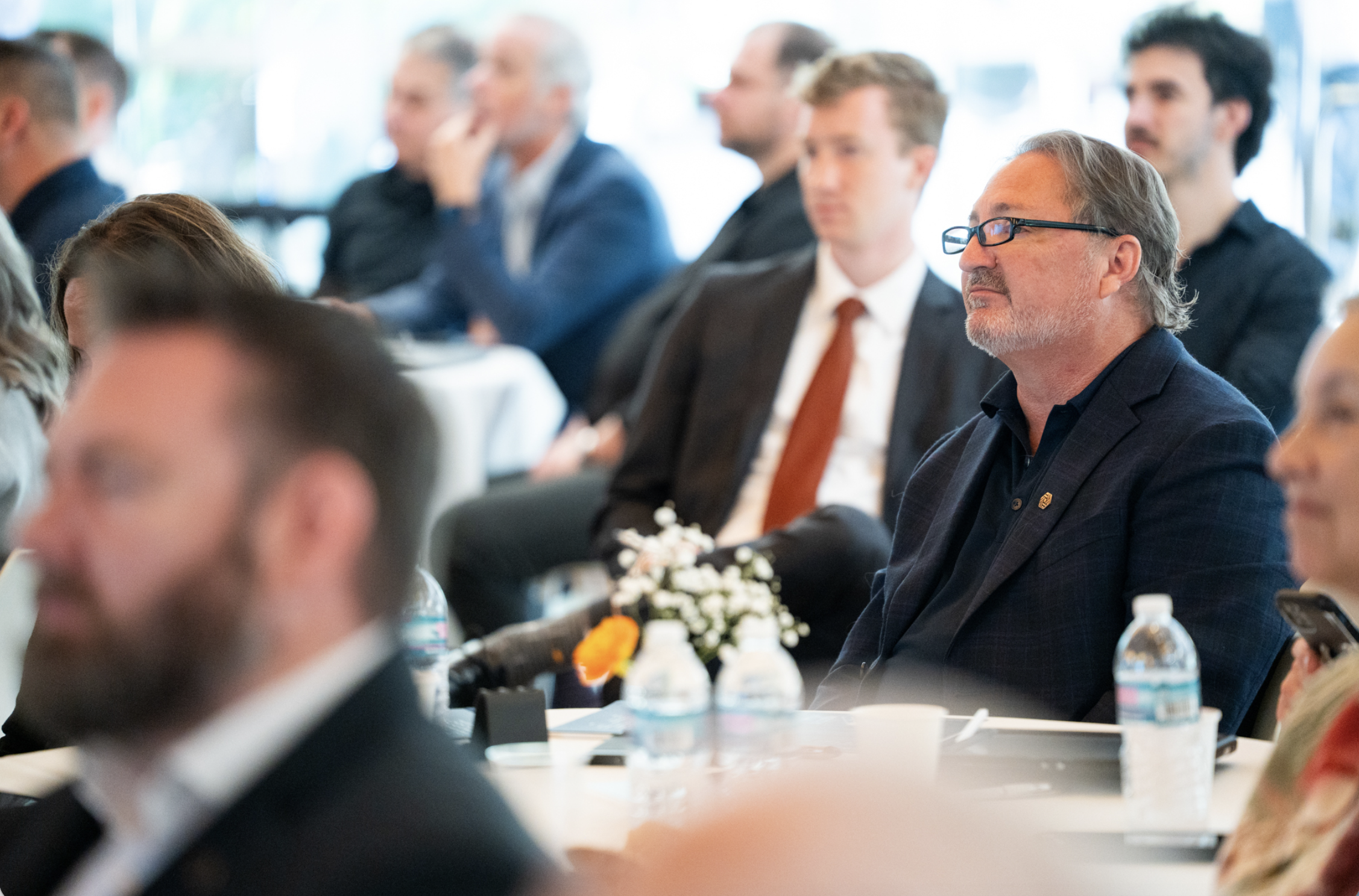
Chief Scientists are Core4ce’s highest-ranking technical leaders—entrusted with shaping our innovation strategy, guiding enterprise-level technical direction, and advancing the communities of practice that drive our long-term mission success. This is the third in a series of four spotlights on our current chief scientists.
With over two decades of experience supporting the Military Health System and its mission, Mark Poe has consistently demonstrated his leadership in integrating advanced AI/ML technologies into practical healthcare solutions. A particularly notable achievement is his leadership in the conception and development of Project Bioscape, a bespoke subscription-based biosurveillance data feed designed to fuse open-source intelligence (OSINT) with other amplifying data such as disease vectors and transmission pathways, recent news, and both prepublication and peer reviewed scientific journal data.
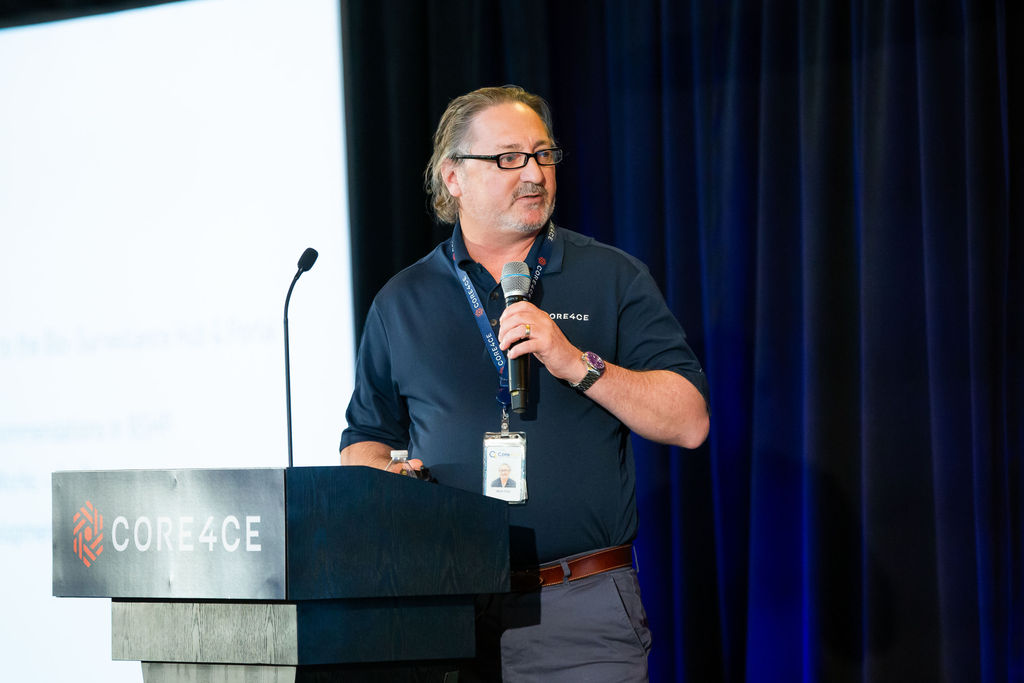
Leadership to Life Lessons: A Conversation with Chief Scientist Mark Poe
We recently had the opportunity to sit down with Chief Scientist Mark Poe to discuss emerging technologies, career insights, and life outside the office. Mark shared practical leadership lessons, professional advice, and a few personal stories—including his experience working as an “Industrial Food Surface Palatable Surface Degreaser.”
Q: What’s one challenge that keeps you up at night (in a good way)?
A: One challenge that keeps me up at night, in a good way, is how we operationalize innovation, not just pitch it. I have always been wired for practical application, and I genuinely believe some of the best innovation is not always something brand new. It is taking capabilities we already have and applying them in novel ways to solve real mission problems. The challenge, and the fun, is closing the gap between a strong concept and something that is usable, repeatable, and scalable in the real world.
Q: What excites you most about the work Core4ce is doing as a company right now?
A: For years I used to say, “We’re not inventing new wheels anymore,” meaning innovation felt more incremental and targeted than the kind of breakthroughs that reshape everything. But generative AI has changed my mind. It feels like a true inflection point, and it is one of the most exciting shifts I have been a part of in my career. What excites me most is that Core4ce is not just talking about it. We are focused on making it real by grounding it in data, putting it into workflows, and delivering capability people can actually use.
Q: Where do you see the biggest opportunity for innovation in defense technology?
A: The biggest opportunity for innovation in defense tech is the practical application of AI to improve sense making – not AI for novelty’s sake, but AI as part of the human-machine continuum. We are surrounded by data, but the bottleneck is turning that data into understanding and decisions quickly and responsibly. The machine should do what it is good at: triage, correlation, summarization, pattern detection, and highlighting anomalies, so people can focus on context, judgment, and accountability. The opportunity is not AI replacing people; it is AI amplifying human judgment. And to make that work in real mission environments, we have to engineer trust through grounded data, provenance, transparency, and guardrails so outputs are reliable and actionable. Sensemaking is the real bottleneck. AI should reduce cognitive load and increase decision velocity.
Q: What emerging technology or trend are you watching closely?
A: I am watching agentic orchestration closely, how we move from single prompts to systems of specialized agents that can plan, retrieve, reason, and take action across a workflow. The real value is when these agentic patterns are grounded in enterprise data and wrapped in the right guardrails, so they become dependable copilots for real work, not just clever demos.
Q: What’s the best advice you’ve ever received?
A: The best advice I have ever received was about leadership. A mentor told me leadership is essentially a contract. You do not get to declare yourself a leader; it only works if other people choose to follow. He said something I have never forgotten: “If you think you’re leading but you turn around and no one’s there following you, you’re just out for a nice walk.” That stuck with me because it is a reminder that real leadership means earning trust and painting a picture of a future that people actually want to help build.
Q: What advice would you give to students who are preparing to enter the workforce?
A: Never stop learning, and be intentional about it. Keep a beginner’s mindset, ask questions, and do not be afraid to dig into things that feel just outside your comfort zone. I still try to learn something new every day, and it is genuinely what keeps me motivated. In fast-moving fields, your learning rate becomes your advantage.
Q: What’s the most unique work experience that you’ve had? (Any odd jobs?)
A: I was an “Industrial Food Surface Palatable Surface Degreaser” at a Chinese restaurant, AKA, a dishwasher. It taught me work ethic fast: show up, do the job well, and respect every role on the team.
Q: Favorite podcast, book, or show right now?
A: Right now I am rotating between a few favorite podcasts: the Lex Fridman Podcast, The Rest is History, and Radiolab.
Q: If you weren’t a chief scientist, what job would you think would be fun to try?
A: I genuinely don’t know. I am one of those people who is lucky enough to like what I do. But if I had to reinvent myself, it would be something that combines travel, food, and great wine.
Q: Movie you’ve watched the greatest number of times?
A: The original Jaws. It never gets old.
What His Colleagues Are Saying
“Mark is the best kind of scientist; he understands the science, but he also understands mission, and he delivers consistently.”
– Todd Harbour, Core4ce Managing Partner and Chief Technology Officer
“Mark is a great solutioner, blending technical innovation with deep customer insight that creates pointed and applicable solutions to problem spaces. This was most recently demonstrated by the launch of CrossSight.”
– Rick Hubbard, Core4ce Chief Scientist