
Chief Scientists are Core4ce’s highest-ranking technical leaders—entrusted with shaping our innovation strategy, guiding enterprise-level technical direction, and advancing the communities of practice that drive our long-term mission success. This is the first in a series of four spotlights on our current chief scientists.
Core4ce Chief Scientist Dr. Curtis Arnold plays a pivotal role in supporting the Department of War (DoW) Chief Information Officer (CIO). He leads the Cybersecurity Service Provider (CSSP) program, which defends DoW’s data, applications, systems, and networks. As an action officer for senior-level steering committees, workgroups, and summits, Dr. Arnold helps shape the Department’s strategic direction while driving critical initiatives from the White House, National Security Council, and Congress related to cyber defense and operations, including the Presidential Executive Order (EO) on Artificial Intelligence (AI).
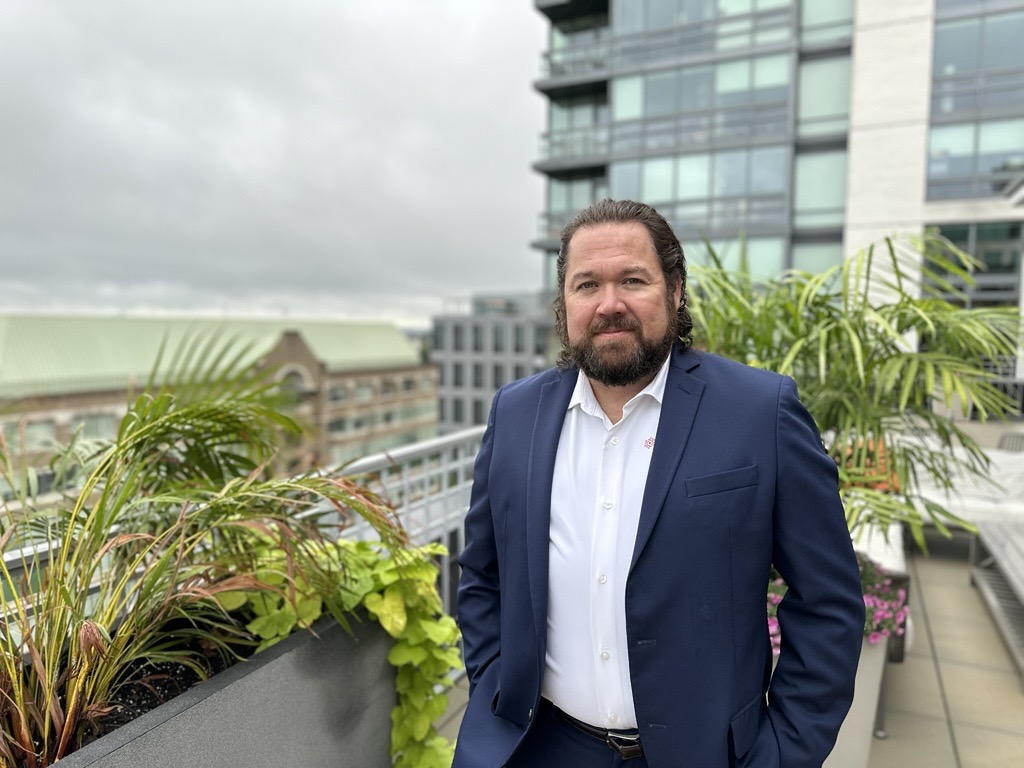
Dr. Curtis Arnold
Data, Defense, and The Princess Bride: A Conversation with Chief Scientist Dr. Curtis Arnold
We recently had the chance to sit down with Curtis to discuss emerging technologies, professional advice, and life outside the office. From The Princess Bride to Quantum technology, learn more about the man behind the Chief Scientist title.
Q: What’s one challenge that keeps you up at night (in a good way)?
A: The one thing that keeps me up at night in a good way is that there continues to be a lot of room for innovation in our strength areas. Our customers continue to face emerging threats and are turning to us for help because we have an operationally grounded background. This gives us the freedom to innovate with great partners.
Q: What excites you most about the work Core4ce is doing as a company right now?
A: There is a lot that Core4ce is doing that can excite you. Our innovation and customer programs are great, but I would have to say that I am most excited right now about how we are mentoring junior employees. Core4ce is known for having very senior thought leaders, and you can see how excited they get when engaging with our team members and helping to bring them up professionally. We can see how junior employees are taking our guidance and implementing it in their daily activities, which is really rewarding as one of the Chief Scientists.
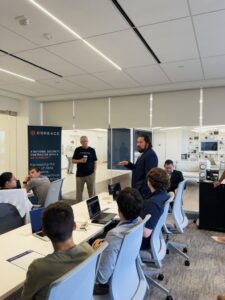
Curtis offering insights and guidance to interns at our Summer Internship Event.
Q: Where do you see the biggest opportunity for innovation in defensive cyber?
A: There are multiple areas for innovation within defensive cyber, but I would probably have to say either leaning into a data-centric defensive program like the Department of War (DoW) is currently doing or human factors. The nerd in me will always love data, but focusing on the human side of cyber is really fascinating. We are providing analysts more and more data, but how do we train them to operate on top of that data or identify dashboards that help them consume data faster as an example.
Q: What emerging technology or trend are you watching closely?
A: Easily the top emerging technology that I am following is Quantum technology. It is going to provide the world with a lot of capabilities and includes multiple areas for innovation.
Q: What’s the best advice you’ve ever received?
A: The best advice I have received is to volunteer for the right opportunities in order to gain experience, especially early in your career. This is how you can gain exposure and experience in a lot of different areas, usually in a safe manner with a mentor. This is very important for more operational events. There are a lot of senior peers that I know whom we met in a basement somewhere. Everyone will remember you were there with them.
Q: What advice would you give to students who are preparing to enter the workforce?
A: Understand that you don’t know everything, and no one expects you to. You are not considered an expert in the field. School was meant to make you well-rounded and give you experience working with your peers as you are introduced to your major. It is okay to not know a question, but make sure you know how to go find the answer and follow up to provide it later.
Q: What’s the most unique work experience that you’ve had? (Any odd jobs?)
A: Not long after high school graduation, I was in college but lost my scholarship due to a congressional change. I ended up working in a turkey factory. It was an interesting position, but that is when I decided to join the Army, which turned out to be one of the best decisions I ever made.
Q: Favorite podcast, book, or show right now?
A: I would recommend the Harvard Business Review right now. It’s important to keep up your technical skills but also look at how organizations function and better ways to improve processes and organizations along the way.
Q: If you weren’t a Chief Scientist, what job do you think it would be fun to try?
A: I wouldn’t mind being an international travel guide. I love to travel and learn about new places, both internationally and domestically.
Q: What movie have you’ve watched the greatest number of times?
A: The movie I have watched the most times would probably be The Princess Bride. My kids love it, but who doesn’t like a lighthearted movie that is funny?
What His Colleagues Are Saying
“Dr. Curtis B. Arnold turns detailed tactical information into clear, practical policy the CSSP community can act on, bringing steady judgment and a focus on results that make complex issues manageable and impactful. His ability to help leadership quickly grasp the core issues in simple-to-understand terminology and concepts while consistently finishing what others start by turning insight into measurable results is something that always sets him apart from others.”
– Robert Mawhinney, Core4ce Strategic Cybersecurity Planner
“We’re thrilled to feature Curtis as a speaker at Core4ce’s upcoming Spring Innovation Summit, where our broader team and partners will hear firsthand about the critical support and leadership he provides to DoW CIO. Curtis actively embodies Core4ce’s values – generously sharing his expertise, championing early career professionals, and resolutely supporting the national security community.”
– Alex Bender, SVP of Communications and Marketing
A Proven Leader in Defensive Cyber
Dr. Arnold’s leadership in 2025 has been particularly transformative. He led Department-wide efforts to advance the CSSP program, address the AI EO response, and refine the operational risk component of the Cybersecurity Risk Management Construct (CSRMC). His focus has been on shifting the CSSP program from a network-centric model to a scalable, data-centric construct aligned with the NIST Cybersecurity Framework (CSF) 2.0. This shift enables near-real-time risk management in collaboration with USCYBERCOM and other federal partners.
Before joining Core4ce, Dr. Arnold served as Chief of the Sustaining Base Network Assurance Branch at the U.S. Army Research Laboratory. There, he oversaw Defensive Cyber Operations (DCO) ranging from research and development to 24/7 cybersecurity services. His responsibilities included oversight of more than 300 external customers and monitoring over 500 intrusion detection sensors worldwide. Over the course of his 26-year career, Dr. Arnold has held various leadership, policy, and technical positions supporting the Department of Defense (DoD) and federal agencies.
Prior to his distinguished civilian career, Dr. Arnold served as a Non-Commissioned Officer in the U.S. Army Judge Advocate General’s Corps, where he honed the strategic and analytical skills that would later define his professional contributions. He holds a BS and MS in Information Technology (Information Security) from Johns Hopkins University and a D.Sc. in Cybersecurity from Capitol Technology University.